
Renewal Is Too Late: Why Employers Must Reduce Claims Before Underwriting Starts
- Apr 4
- 2 min read
Most employers are taught to treat renewal season like the moment to solve healthcare costs. That is the trap.

By the time renewal discussions begin, the claims have already occurred, the utilization patterns are already established, and the carrier or TPA is already pricing your future based on what your population did months earlier. At that point, you are not really reducing spend. You are reacting to spend that has already been locked into your trend.
This is where many organizations lose leverage. Leadership teams spend months focused on contribution strategy, plan design tweaks, and broker negotiations, while the real cost drivers continue building underneath the surface. Emergency room misuse, unmanaged chronic conditions, avoidable urgent care utilization, specialty medication spend, and delayed intervention all create claims activity that compounds long before renewal is on the calendar.
The issue is not that renewal is unimportant. The issue is that renewal is too late to be the starting point.
Healthcare costs are driven in real time throughout the year. Every unnecessary ER visit, every unmanaged condition, every avoidable high-cost claim shapes the financial story your carrier sees. When employers wait until renewal to act, they are trying to negotiate against a claims history that has already been written. That is a weak position. It limits options, reduces negotiating power, and turns strategy into damage control.
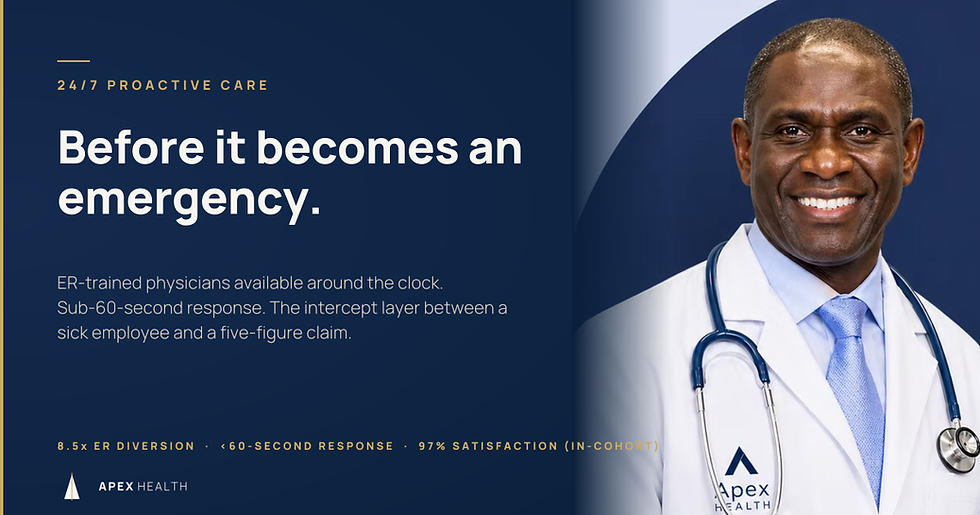
A stronger model is to intervene upstream. Employers need visibility into what is actually driving claims, where avoidable spend is occurring, and which members are moving toward higher-risk utilization. That requires a proactive layer, not a seasonal review. When organizations identify cost drivers early, guide members to the right level of care, and reduce unnecessary claims activity during the plan year, they reshape the renewal conversation before underwriting ever begins.
That is the strategic difference. Instead of showing up at renewal asking how to absorb another increase, employers show up with a different claims story. They bring a healthier population, better utilization patterns, lower avoidable spend, and stronger financial control. That creates leverage.
This is why employers should stop asking only what their renewal increase will be and start asking what is happening inside the plan right now. If the answer is unclear, that is the first problem to solve.
At Apex Health, we believe employers do not have a premium problem first. They have a claims behavior problem first. Premiums are simply the downstream result. If you want to reduce healthcare spend in a meaningful way, the work has to begin before renewal, not during it.
The organizations that win are the ones that move early, act on claims intelligence, and create better outcomes before the market prices in their risk. Everyone else is left negotiating from behind.
Want to see what is driving your claims before renewal locks in your costs? Request an Apex Health Risk Assessment.


Comments